
It’s a Saturday night during my Lower Mid year. I’m sitting on the edge of a friend’s bed, holding my phone like a prop, half-listening to a conversation I have nothing to add to. The room is full, the music is loud, and I remember thinking: I don’t want to be here.
And then, almost immediately after: but what if I leave and something happens? So I stayed for another hour, acting like I was having a good time. Because that’s what you do at Hotchkiss: you stay present, stay available, stay in the mix, always.
I grew up as an only child, probably the most introverted person you’d meet. I built things in my garage, tinkered in my basement, read afternoons away, sang badly, made up my own dances, and did anything else my young mind dreamt of at the moment.
Then, I came here. No one explicitly says being alone is a bad thing. It happens through hundreds of small moments, in the way a loud, full table feels safer than an empty one, being busy signals that you’re thriving, a Saturday night alone in your dorm, even if you genuinely wanted it, carries this faint shame, like you’re someone things aren’t happening to.
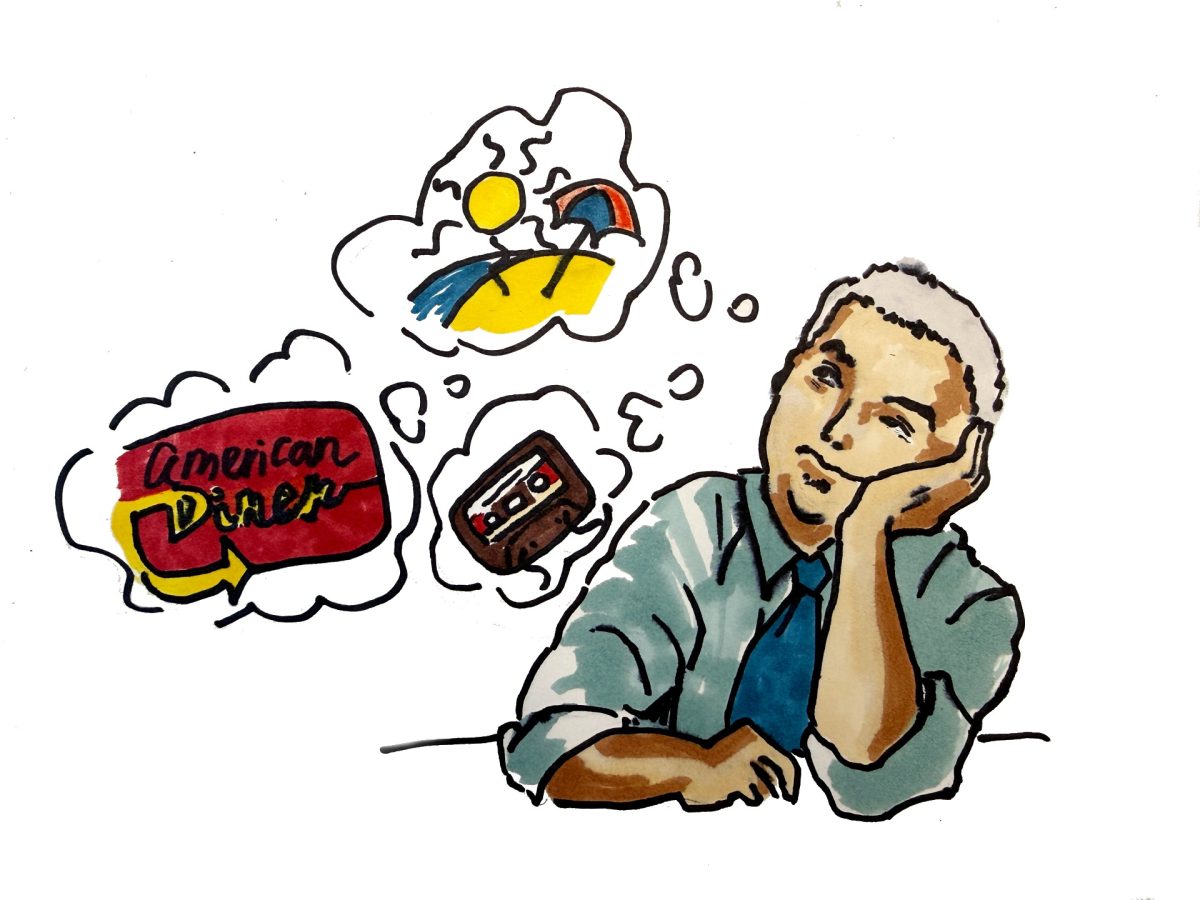
I had developed, without realizing it, a reflexive need to ensure there was always something between me and silence. A show, a scroll, a conversation I didn’t particularly want to be in. The cruel irony is that the more I filled the space, the lonelier I felt. There is a version of loneliness I’ve come to understand that has nothing to do with how many people are around you.
But this past winter, I read a book, The Comfort Crisis, that put words to something I hadn’t been able to name. It argued that despite the fact that people today are rarely physically alone, we are lonelier than any generation before us—not because there’s a scarcity of company, but because we’ve lost access to real solitude. Most of us have never actually sat with ourselves long enough to know who we are underneath the noise.
This semester, I started small. It began with walks down Race Track Road, to the lake, around town, out to the farm. No music, no podcasts, nothing. Just me and my thoughts. The first few times, I had no idea what to do with myself. I kept reaching for my phone, thinking about what I was missing or what I should be doing.
But slowly, as I stuck with it, I started noticing things I’d walked past a hundred times: the way the light sits on the lake in the late afternoon or the smell of the path by the farm after it rains. I started sitting in the chapel for a few minutes during the school day to let the sunlight soak in or walk to the VS beach in the evenings to swing and watch the sunset. Of course, none of these are grand. Instead, it was a series of small, deliberate decisions to take ordinary, quiet moments and protect them.
What I found in those walks, to my surprise, was not loneliness,
but a version of myself I had almost completely lost track of: one who knew what she thought and what mattered to her, not just what she had absorbed from the noise around her for years.
When you are never alone, you never really find out who you are. But I think the reason most of us resist being alone goes deeper than habit. Being alone feels like evidence that you have nowhere to be, like no one wants you. We are so afraid of being perceived as lonely that we never sit with ourselves long enough to find out we’re not. And in avoiding solitude to escape that perception, we guarantee the very loneliness we were afraid of showing.
Once you’ve sat alone on a swing watching the sunset and genuinely not needed anything from anyone at that moment, the other pressures get smaller. You stop filling the silence out of panic. You stop showing up to people, needing them to complete something for you. And when you arrive whole instead of empty, that’s when your relationships and social interactions become so much more meaningful.
Hotchkiss gave me the noise that made me lose that version of myself, but it also gave me the space that helped me find her again. It gave me friends who, through their own admirable examples, showed me what it looks like to be happy in your own company. It gave me teachers who pushed me hard enough that I had no choice but to figure out what I was actually made of.