
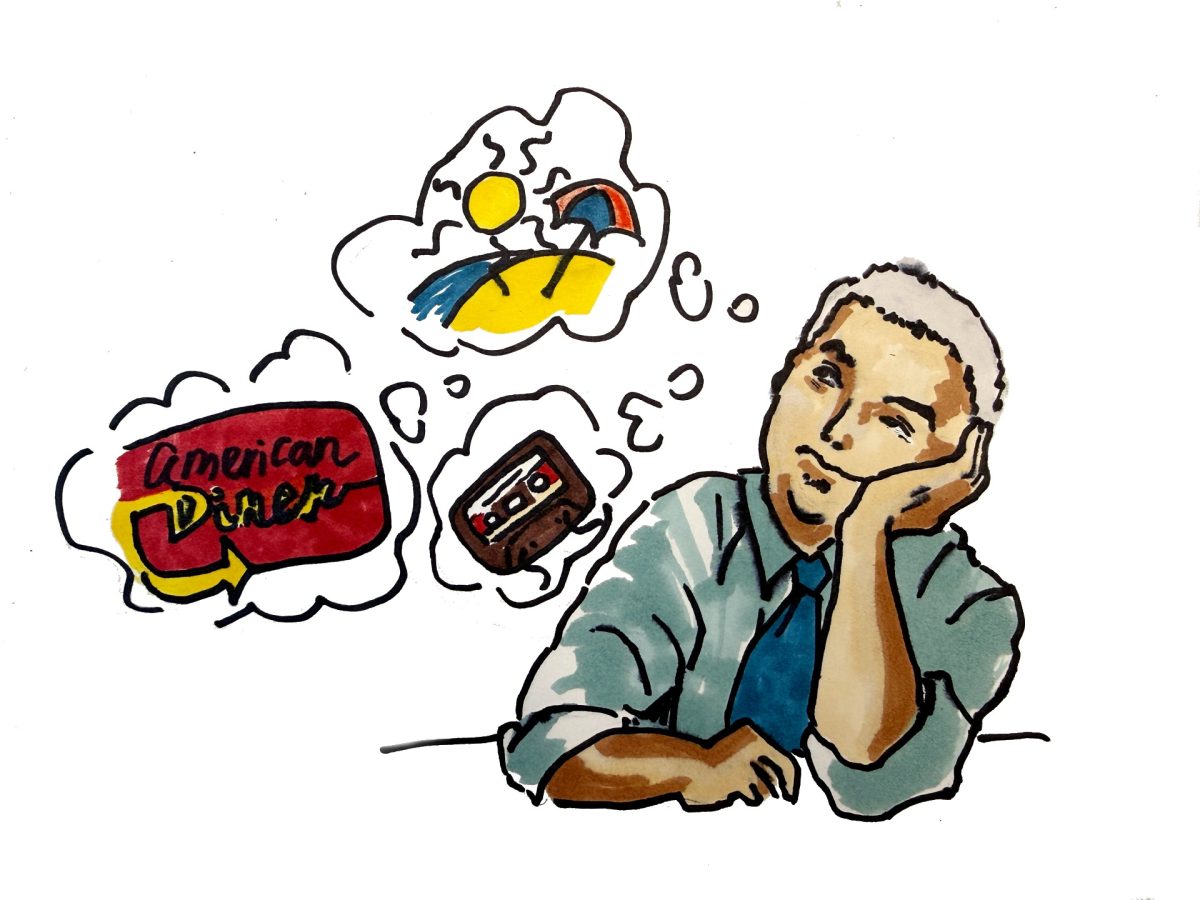
One of my favorite memories is of my sister and me on the trampoline in mid-summer, practicing flips we had absolutely no business attempting. In my version of this memory, we are fearless and laughing, and that perfect afternoon lasts forever. What I often leave out is that a few moments later, I fell and sprained my ankle.
This idea of a perfect memory is called nostalgia. It’s not a lie, exactly, but definitely not the whole truth either. Rather, it is a memory with the inconvenient and uncomfortable parts removed, leaving only the warmth, the light, the feeling that things were simply better back then. Nostalgia is one of the most human impulses, and because of this, it is vulnerable to manipulation.
The same subconscious alterations I make to that summer afternoon, politicians may do to entire decades of history. Entire eras and entire histories are replaced with carefully curated narratives. They hand us the “highlight reel” and label it history, promising to take us back to when times were “better.” And we tend to feel this pull before we ever think to ask: back to what, exactly? And better for whom?
Psychologists have studied nostalgia for decades, and what they have found is more complicated than simple sentimentality. According to Professor Constantine Sedikides and his colleagues at the University of Southampton, nostalgia is not just a passive daydream; it is an active emotional response, triggered specifically by dysphoric states: loneliness, anxiety, uncertainty, and loss. In other words, we don’t feel nostalgic randomly. Psychological discomfort tends to trigger nostalgia: the worse we feel about the present, the more powerfully the past calls to us.
This research shows that nostalgia, in itself, is not harmful. Rather, it fosters social connectedness as an effective coping mechanism that has helped humans navigate grief and fear for centuries. Unfortunately, the benefits of nostalgia are precisely what make it vulnerable to politicians taking advantage of this human instinct in times of unrest. In the hands of those who know exactly when to invoke it, nostalgia ceases to be a mere psychological comfort and becomes a tool of manipulation.
Examples of leveraging nostalgia to serve personal political means are not subtle across history. Donald Trump’s “Make America Great Again” campaign implies that there was a time when the United States was great, that it is no longer great today, and that it can be great again if only the people follow the right leader. Across the Atlantic, Nigel Farage held up his new non-EU passport in 2019 and tweeted, “We got our passports back,” thus evoking a time when Great Britain still maintained the pretense of being a great power. In France, politician Marine Le Pen promised voters a road back to “our glorious history” in her 2026 campaign. The change these movements offer is not innovation, but restoration: of old values, old identities, old hierarchies.
Each of these politicians builds their campaigns around the notion of a golden age. But the question is: whose golden age?
Trump’s rhetoric, for instance, idealized the mid-twentieth century as an era of American prosperity and cultural homogeneity. However, this selective memory ignored systemic realities like racial segregation and gender discrimination, offering a distorted view of American history. The 1950s in America were golden— but only if you were the right color, the right gender, and on the right side of the tracks. For millions of Americans, that celebrated decade was not a high point, but rather something to escape.
But there is a profound difference between a memory you return to and an idea of one that somebody else sells to you. When a politician stands at a podium and invokes a golden age, they are not merely sharing a memory; they are selectively constructing one to serve an ulterior purpose. When that construction erases those who suffered in the eras being celebrated, it stops being remembrance and wielding it becomes a weapon.
The fact is that nostalgia will always feel true to us; it’s simply human to seek the familiar in times of anxiety. What we can do, however, is to stop letting other people decide what we are nostalgic for and whose version of the past gets to stand in for history. Feel the pull of the past. Then ask who’s pulling. The answer will tell you everything you need to know about the present.