
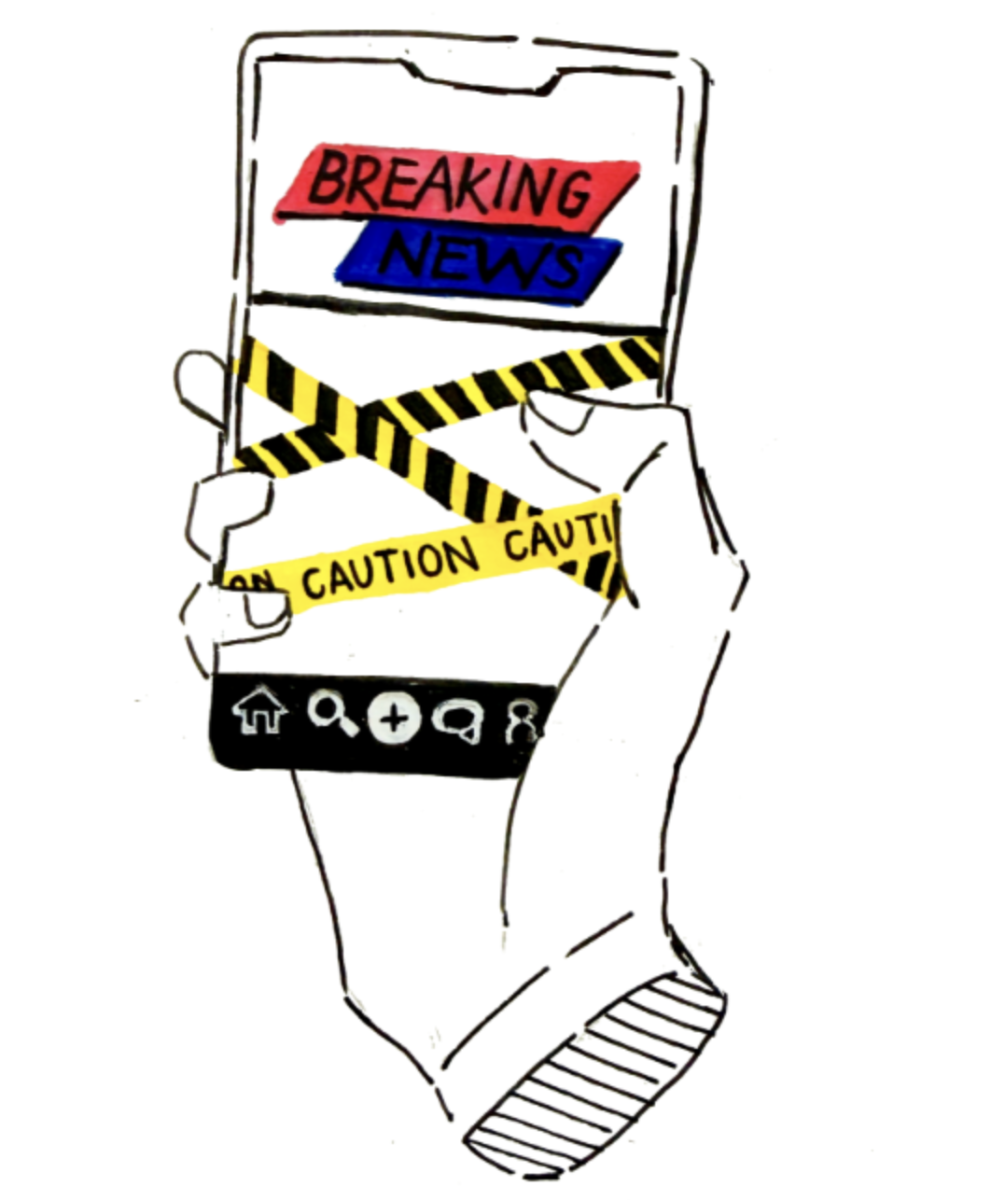
For many teens, myself included, scrolling through social media has become so routine that we don’t even notice how much political content we are absorbing. You open an app for entertainment, and within minutes, you’re being shown opinions about elections, policies, social issues, and more. Yet the influencers delivering these messages often lack the credibility of traditional news sources.
Growing up in a family that was very skeptical of social media, I didn’t get my first app until the end of sixth grade. Even then, I had strict controls and couldn’t access videos without a password. I was always told to question what I saw online.
Unlike journalists, influencers aren’t held to professional standards like fact-checking or citing sources. That doesn’t mean everything they say is false, but it does mean we should check their claims. A journalist can lose credibility— or even their job—for spreading misinformation. An influencer, on the other hand, often simply gains attention. On social media, being wrong or misleading isn’t always punished; in some cases, it actually helps content spread faster.
Confidence is not the same as credibility.
Influencers rarely present political issues in a balanced or fully accurate way. Instead, they package them into short, often controversial, videos that gain popularity for the wrong reasons.
The problem is made worse by how algorithms reward engagement, not accuracy. Emotionally charged content spreads faster than facts, meaning users are constantly exposed to distorted narratives without realizing it.
Over time, this changes how people view politics. Complex issues get flattened into simple, black-and-white narratives. Instead of thoughtful discussion, conversations turn into “you’re wrong, I’m right” arguments, where expressing one’s opinion matters more than understanding. Nuance disappears, replaced by a false sense of certainty.
What makes influencers especially powerful is the sense of familiarity they build with their audience. They create parasocial relationships with viewers, making them seem like trusted friends. Their personal tone lowers people’s defenses. Because influencers feel relatable, it becomes easier to trust them without questioning where their information comes from. This is especially impactful for younger audiences, who may look up to these creators.
Repetition also plays a major role in shaping people’s trust. When multiple influencers repeat the same claim, it starts to feel true simply because it’s familiar, even if it isn’t accurate. The structure of social media platforms themselves allow incomplete information to thrive. Social media doesn’t just distribute political content; it reshapes it into something more engaging, simplified, and absolute than politics actually is.
I’m not suggesting that we cut out social media entirely. It can be useful and even valuable at times. But when it comes to political content, it’s important to approach it with caution—not in a paranoid way, but in a critical one. That means checking reliable news sources and remembering that confidence is not the same as credibility.