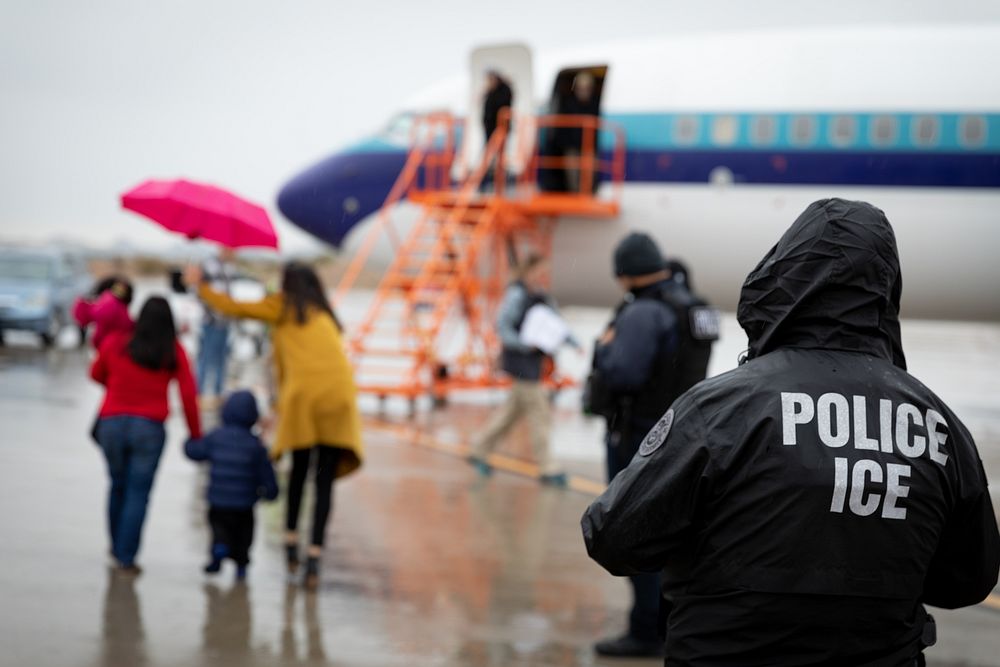
A couple of weeks ago, I got a notification on my phone from The New York Times alerting me that Immigration and Customs Enforcement (ICE) agents had been deployed to TSA in airports. Previously, my mother’s friends— hardworking people whose families live across state lines—could fly to see each other without conflict. Since being away from your country is already hard enough, at least flying between states made this easier for them. However, ICE’s placement at airports raised questions about their safety and belonging, and feelings of insecurity and discomfort within my community.
Airports in the United States are supposed to be neutral spaces, places where security is about ensuring safety, not fueling baseless suspicion. But for many people, especially those who are not white, that has never fully been the reality. The presence of ICE agents in airports does not exist in a vacuum; it builds on a long history of racial profiling in this country, where appearance, name, and perceived identity have often determined who gets stopped, searched, or questioned.
The current administration claims they are conducting “targeted immigration enforcement,” helping with crowd control, monitoring exits, and “stepping in during staffing shortages.” But what does “targeted” mean in practice? History shows it is not always as precise as it sounds. In 2017, Gerardo Martinez-Morales, a Mexican father and grandfather who lived in the United States for over two decades, was pulled over for something as minor as a broken taillight and deported a week later, separated from his family of U.S. citizens.
If certain people are consistently made to feel singled out in the name of “safety,” then we have to ask: safety for whom? And at what cost?
This case reflects a broader pattern tied to programs like 287(g), which allow local law enforcement to carry out federal immigration duties. While these programs are presented as targeting “criminals,” studies and civil rights investigations have found that many departments use them far more broadly, often stopping harmless individuals for minor infractions and funneling them into deportation systems. According to the American Civil Liberties Union, nearly two- thirds of participating agencies have a record of racial profiling or civil rights abuses. As a result, trust in law enforcement has declined in communities where these programs operate. This context matters when thinking about ICE’s presence in airports today.
So when ICE agents are placed in airports under the label of “targeted enforcement,” it is fair to question who is actually being targeted. Is it truly only criminals, or does it become anyone who fits a certain appearance—someone who is 5 feet tall, with brown skin, dark hair, and “foreign-looking” features?
This kind of bias feels personal to those around me: one of my past history teachers shared that whenever she travels (often almost every single time she passes through security checkpoints), she is asked to open her suitcase for “additional” searches for “dangerous objects,” a pattern that feels less random and more tied to how she looks and her non-Anglo name. According to reports from CNN and Al Jazeera, ICE agents are mainly assisting TSA and not conducting full screenings, yet their presence alone has raised concerns among civil rights groups and travelers.
This pattern reflects a longer history in the United States, especially after the September 11 attacks, when Islamophobia surged, and hundreds of violent incidents and hate crimes were reported against Muslims and people perceived to be Muslim, including Sikhs and South Asians. That wave of fear normalized profiling based on appearance, and even decades later, many still report discrimination and suspicion tied to how they look or what their name sounds like.
So when ICE appears in airports today, even if officials claim their role is “limited,” it builds on a system where bias has already shaped who gets stopped, questioned, or searched. Airports were designed as spaces for travel, but if certain people are consistently made to feel singled out in the name of “safety,” then we have to ask: safety for whom? And at what cost?
I invite you to think beyond the headlines you see about ICE, because history cannot keep repeating itself. I came to this country when I was 10 years old. Airports were always a place of anxiety for my brown skin, my non- English speaking mother, my dark hair, and features. This experience should not be the case at an airport in the United States, where we advertise freedom, diversity, and democracy.