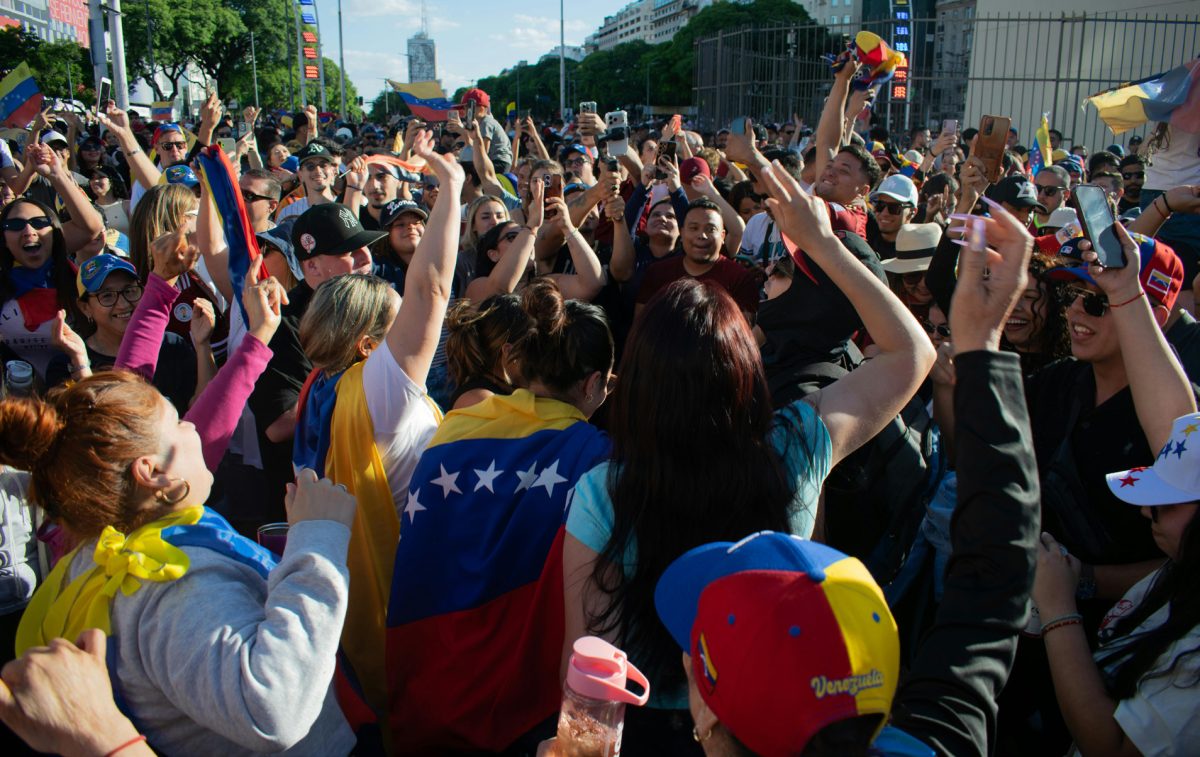
On the day following Maduro’s removal by the Unitied States, glimpses of hope crept into the streets of Venezuela after decades of terror. Celebrations sprang up across the country. The people could finally breathe. This event has not only reshaped the futures of millions of Venezuelans but also triggered international controversy.
After arriving in New York, Maduro pleaded not guilty to narco-terrorism conspiracy accusations; he claims he is a “prisoner of war,” not a criminal. Maduro has allegedly been involved with narcotrafficking and the Cartel de los Soles.
Beyond narcotics allegations, Maduro and his predecessor, Hugo Chavez, are largely responsible for the suffering of the Venezuelan economy: the most severe economic decline seen in history. Venezuela has the largest known oil reserve in the world, and under Maduro, its production steeply declined due to mismanagement and corruption. His disastrous economic policies and sanctions led the government-owned corporation to $100 billion of debt. His kleptocratic dictatorship caused eight million Venezuelans to flee the country.
Consider the story of one of my best friends—someone just like any of us, with hopes, dreams, and aspirations. She was born in Venezuela and lived there until she was seven. Because of Maduro’s regime, she and her mother were forced to flee, leaving the entire rest of their family behind. Her experience is one of many, and her profound relief at Maduro’s removal is shared throughout the Nation. The glimpse of hope his capture has given to Venezuelans is the one thing they can grasp during this period of turbulent uncertainty.
She said to me, “Maduro is gone.” Her simple words carried years of terror and despair. The story of Venezuela has long been laden with poverty, food shortages, hyperinflation, hunger, and fear; now, with this single decisive event, Venezuelans can rest for a moment. In the immediate aftermath of Maduro’s capture, feelings exploded. Crowds on the street cheered the fall of his regime, and people overseas saw a chance to reunite with their families after years of separation.
However, fears surrounding the United State’s motives in removing Maduro quickly surfaced. The instability of Venezuela’s future raises doubts about whether the initial hope is truly warranted. To fully understand the brewing controversy, it’s important to note the methods taken by the United States to remove Maduro, and the reasons behind them.
The U.S. government has been questioned on whether it has authority to use military force in Venezuela without international approval. Concerns are growing that this alleged violation of sovereignty may set a dangerous precedent for forceful interventions in global affairs without repercussion. But in this case—knowing the damage of Maduro’s regime and the number of political protestors he has imprisoned and killed—shouldn’t it be seen as necessary?
Although Venezuelans are optimistic that things are changing for the better, hope is mixed with worry about what the future will bring. A major worry is the future administration of Venezuela’s oil reserves. President Trump stated in a press conference that the U.S. will “run the country” and take control of the oil. Maduro’s capture could be a strategic move to gain leverage over the U.S.’s international opponents like China and Russia, who have both had significant economic links to Maduro’s regime.
This raises a crucial question: are Trump’s actions truly for the greater good of Venezuela, or is he moving one of his pawns to achieve his self-interested goals? Whether or not President Trump acted out of self-interest, his actions have resulted in the long-awaited dawning of a new era, offering Venezuelans across the world a chance to reclaim and rebuild their nation.