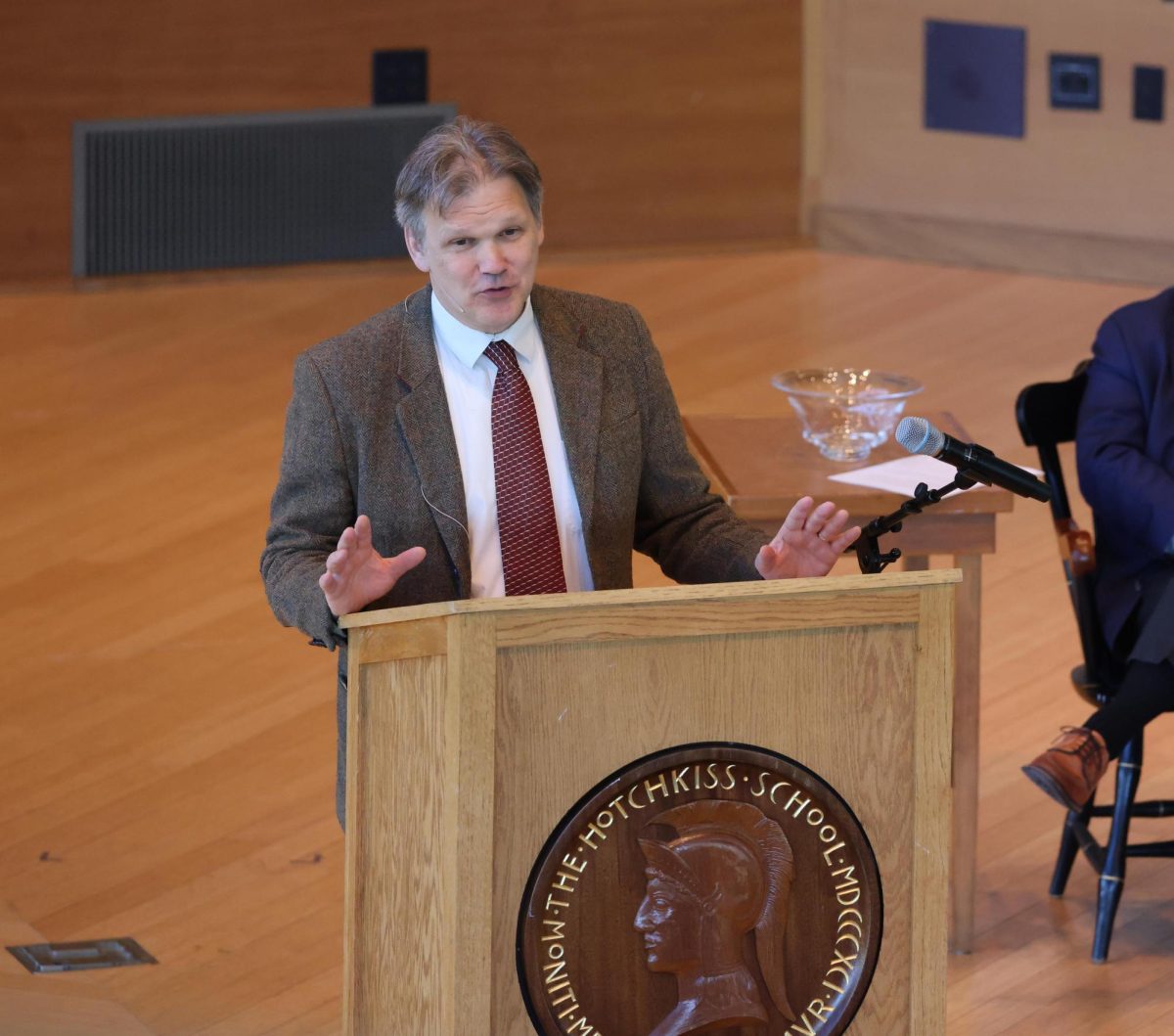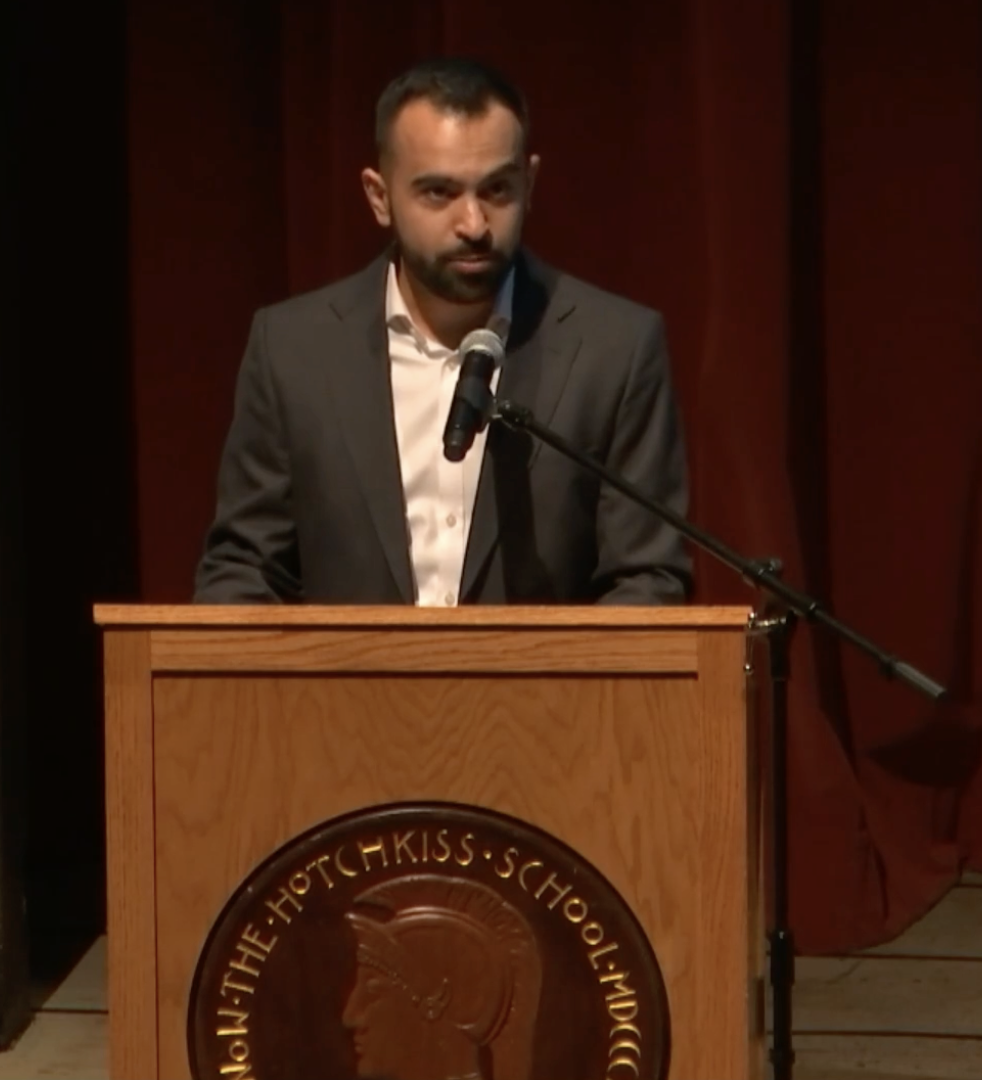
June 2026 marks the last month that Mr. Craig Bradley will reside on campus as the 15th head of school. Mr. Bradley has made a tremendous impact over the past ten years, helping the school achieve distinction in academics, admissions, athletics, and the arts. Before arriving in Lakeville, Mr. Bradley was an assistant dean and class dean at Dartmouth College, a dean of students at Kenyon College and Bowdoin College, and a senior manager of strategy and planning at the Aga Khan Development Network, a global network of schools.
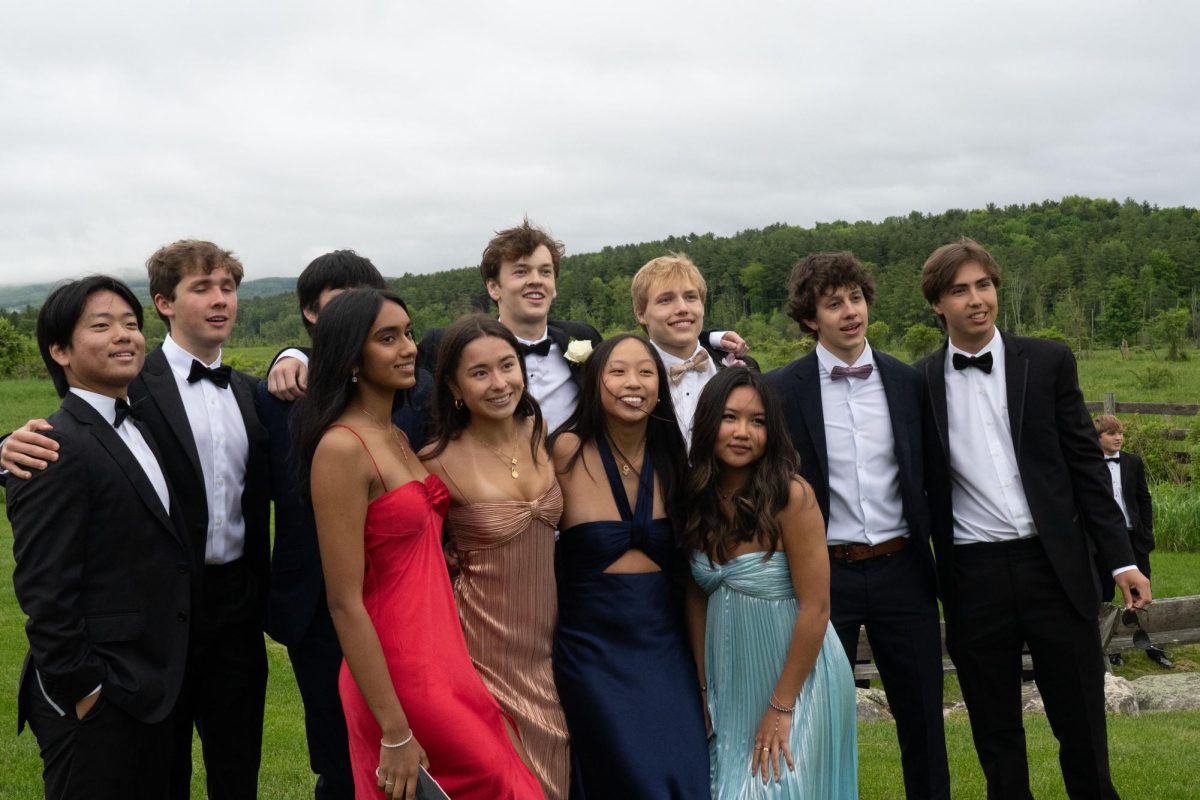
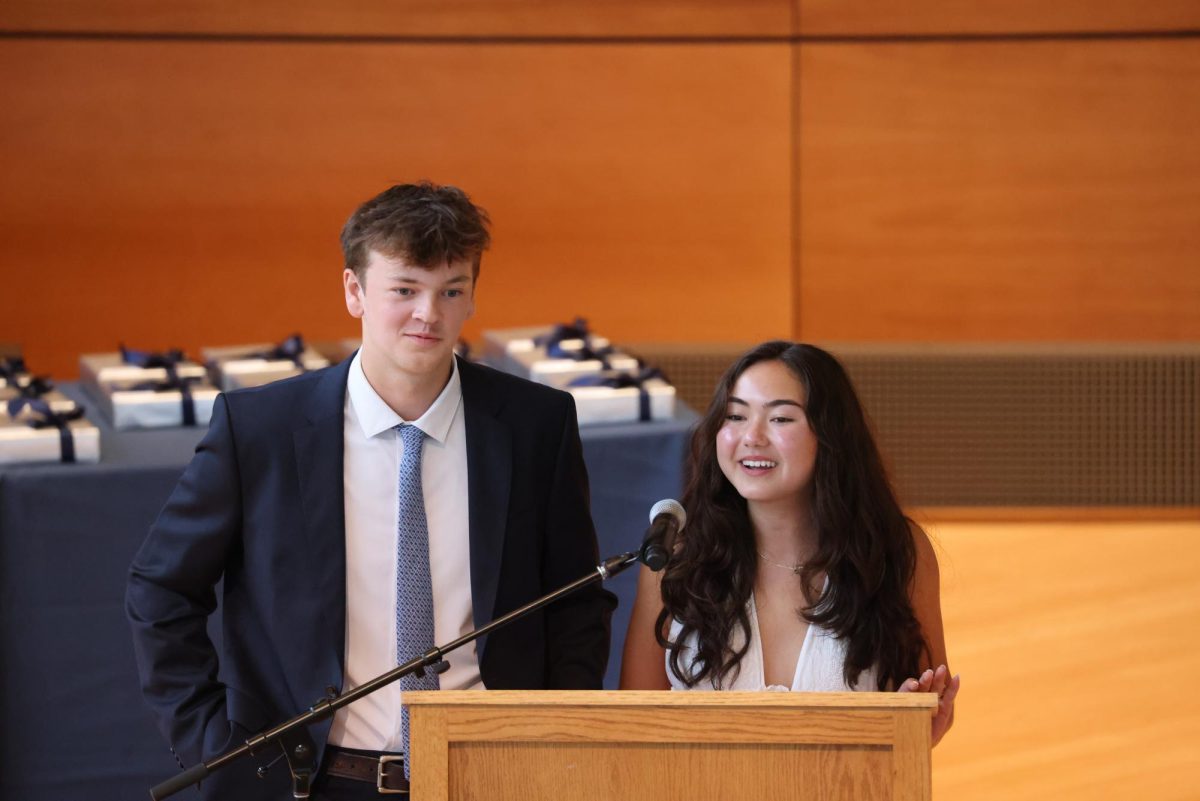
On May 22, the class of 2026 hosted a special all-school meeting to celebrate Mr. Bradley’s “graduation,” which featured a video of previous all-school presidents and alums reflecting on their time working with him. The meeting ended with a clap-out for Mr. Bradley.
When you first arrived here, what did you think the school needed most? How have those needs changed over time?
I was the fourth head of school in five years (Mr. Peter O’Neill was here for one year as an interim, Mr. Kevin Hicks was for two years, and Mr. Malcolm McKenzie was here for six years). So I would say that the first thing that the school needed from a head of school was stability and visibility. I think it’s very important that students are at a high school that knows them and is present for them. As a head of school I think, what do students need? What do they need to get a good education? What do they need to feel a sense of belonging? What do they need to feel a sense of joy? I think students need a certain kind of normalcy, a certain predictability to school life. And a head of school being present a lot is part of it. You’re going to find him standing out in front of his office, you’re going to see him in the Chapel, you’re going to see him in the Dining Hall. He shows up at things—he’ll be at recitals, and he’ll be at theatre performances. Students’ purpose here is to learn and grow, and they deserve a stable, predictable environment to learn and grow in.
How did you become head of school?
I worked for the Aga Khan Foundation for ten years in Paris, building boarding schools in the developing world. I was hiring heads of school, building schools, setting them up, and so on. Every year I was there, I would get called by headhunters in the United States asking me to consider being head of a school. And I said, “There are very small numbers of schools I would actually consider.” Because being a head of school is not just a job: it’s like a marriage. It’s almost your whole life for a period of time.
The thing that really appealed to me about Hotchkiss is the excellence here—it’s the quality of the students and faculty, the benefactors who can sponsor the school, and the resources we have that enable us to create initiatives like the Philharmonic and high-quality programs like Hersey Scholars. Excellence is, by definition, rare. Back then, I viewed Hotchkiss as excellent, but as having the opportunity to be even more so. That’s why I responded to that call and said, “Okay, I will interview for this.” And here we are.
What are some fun memories from your time here?
Four years ago, I had lunch on a Wednesday with the all-school presidents. Richie Mamam Nbiba ’23, one of the all school presidents, said, “Mr Bradley, we really need a holiday. Is there going to be one tonight?” And I said, “I won’t call a holiday unless I’m on campus. I have to go to a Founders League followed by a dinner at Miss Porter’s this evening, and I have to be in Boston first thing tomorrow. So there’s no holiday tonight.” She said, “Okay, got it.”
At Hotchkiss that evening, there had been the Powder Puff football game. A rumor got started that everyone was to go to Frank House after the game and ask for a holiday. So, 20 minutes later, I’m driving along the road, and [my wife] Dr. Webb calls me back. She says, “The students are here outside Frank House, and they want a holiday. They’re asking for you.” But I was already halfway to Boston.
So I said, “Is Richie there? Have Richie come on.” I told Richie, “Since you’re all there—”(it was Dr Webb’s birthday)“—all of you can sing happy birthday for Dr. Webb. But there’s no holiday tonight.” Poor Richie was surrounded by all the disappointed students, but it was funny to me. I thought, “Is this really happening?”
I was surprised by the head of school holiday two weeks ago. I had the Council of Pluralism and Community down for ice cream on Thursday night. We were all sitting around the living room, and at 7:30 p.m., someone got the email from Mr. Tim Sullivan saying we’ve got to come to Frank House. I thought, what is happening?
And then I remembered the experience with Richie, and I thought, oh, there’s a rumor going around or somebody has hacked Mr. Sullivan’s email. Then Mr. Sullivan comes into the room. I had no idea he was even in town; I had just talked to him at midday when he was in New York. But he walks in and says, “Happy holiday!” I had no clue what was going on, but it has become a lifetime joyful memory.
What changes during your time here have you been most proud of?
For one, we’re a much more diverse community. We are also more selective in terms of admissions. Our acceptance rate dropped, and our yield is higher. We were accepting 20% of the applicant pool ten years ago, and about 48% accepted the offer. This year, we took 14% of the applicants and 61% accepted. Mr. Erby Mitchell and his team get a lot of credit for that, but in a sense, all of us get credit for that. People find this place desirable. The Niche ranking this year didn’t hurt, but our selectiveness has been steadily progressing every year, so it’s not all because of Niche. I’m proud of that.
We hadn’t had a comprehensive capital campaign in over 30 years at the school, while our biggest competitors typically had fundraising campaigns about every seven or eight years. That was a kind of institutional neglect.
Our capital campaign, which will end on June 30, has been very successful; people have been immensely generous, and it’s been so heartening to me. I’m proud that we’ve gained the confidence as a board of trustees and a development committee to do something like this. The school community has done great work and raised well over the goal of $250 million, which has enabled us to increase the financial aid budget to help talented kids be here and fund projects like the Dining Hall and the renovations for Hurst Hall.
What are your plans for retirement?
Dr. Webb and I have always traveled a lot. Because we lived in Europe for ten years, we used to travel constantly in Western Europe. So travel will be a part of my retirement plan.
I also love building chairs. I’ve been building furniture for a long
time, and I get a lot of satisfaction out of that. There’s a blue Windsor chair in my office that I made, and you can’t do that as a beginner woodworker. That reflects years and years of woodworking practice, experience, and a certain level of mastery.
I love things that require a long and slow learning curve. I say this to my own daughters: commit yourself to something that you know is going to take a long time to really develop mastery. Do that for your life.
The other thing I’ll do is a lot of whitewater canoeing. Dr. Webb and I have done whitewater kayaking together for a long time. We have a trip planned for July on a river in Quebec with a group of friends, running whitewater, living on the river, and camping on the river. A big part of kayaking is the friendships and community.
I’ll also have more family time. My nephew lives in New Jersey with his parents, so one of my goals is to be present in his life as he’s growing up and spend time with him, since both his parents work full time. Our younger daughter lives in Montreal, so we’ll go up to Canada quite a lot, too.
Then we’re going to be in Brunswick, Maine. It is a really, really beautiful place, but it’s also the poorest state in New England. A lot of charities, especially in regards to newly arrived immigrants and refugees, need people who have language skills. I speak French, so I may work with that population in Portland, Maine. I don’t know exactly what that’s going to look like yet, but there will be a service element to what my life looks like going forward. I want to make myself useful.
Are there any thank you’s you want to say?
The faculty have been really fantastic. I see excellence among our colleagues, and I have great, great respect for what they do. For our faculty, teaching is a full commitment. Many spend their whole working life in this community, so I have a lot of thanks for them and what they do.
I also want to thank my administrative colleagues: we work together day in, day out, at all hours of the week. Some of them you know, but some of them are behind the scenes and are less visible to students. They are highly capable professionals, so I’m immensely grateful to them.
We also have such a devoted group of volunteers. Being a trustee is a voluntary role: these are busy people who don’t all live around here, but have been such a great help to me and my senior administrative colleagues in terms of the big strategic choices and major decisions in the school. I’m inspired by their devotion and their full commitment. During Covid, this was especially evident. I have felt full support from the Board of Trustees from the very first minute I started in this role, and I continue to do so.
And thanks to our students. I take huge pride in the students. When I’m off-campus talking about the school, I often just talk about you. Your moments of mastery and excellence inspire me, because I know the discipline required in achieving them.
People have been asking me a lot this year about my legacy because it’s the end of my career as an educator. And on one hand, there’s a beautiful dining hall, a renovated Walker Auditorium, really impressive admissions results, and college outcomes. But the real legacy is in what the students will do with their lives. I’ve been here ten years, so I can see the sorts of things young alums are getting involved with and the impact they’re beginning to have.
Seeing students go out there and make their mark reminds me that the marriage to this work and this life that I’ve lived fully for the last ten years in this place matters, because the work that you and your predecessors will go and do out there doing matters. I take immense pride in that.
As you prepare to leave, what are some moments that you really cherish or look back on with joy?
There’s so many. I love calling the head of school holidays. That’s joyful for all of us.
I also quite like the simple pleasures of the place. Sometimes, I’ll just sit at a table with students at dinner. It’s spontaneous, and I really enjoy those conversations. I love the diversity of this community. I really hope we never take that for granted. I love hearing people’s stories of where they’re from. Personally, it’s so enriching to get a sense of people from all walks of life, all backgrounds, and geography, and so on. I find that very stimulating. So there’s a lot of joy in this for me, truly.