On May 8-10, 2026, the Hotchkiss Drama Association (HDA) brought Shakespeare’s Romeo and Juliet alive in Walker Auditorium. However, preparation for the performance began months in advance.
The set design was traditionally Shakespearean, with a balcony, pillars, and tiring-house: a back wall with two main doors for entrances and exits and a central curtain. Director Andrew Knight, instructor in English & theatre, said, “The style is a loose recreation of the layout of the Globe Theatre and the Blackfriars Theatre,” where Shakespeare’s company performed.
In preparing Shakespeare’s plays, students must work to make his language accessible to modern audiences. Mr. Knight said, “The goal is to have clarity and help performers and audience members follow the meaning of the dialogue as it unfolds, rather than getting caught up in the language as a barrier.”
Phillip Fauver ’26, who played Romeo, said, “I think a lot of people (including me) are intimidated by the language. Our goal was to bring the words to life in a form that can be appreciated by the audience.”
The production included a number of fight scenes with elaborate choreography. Fauver said, “The sword fights are by far the most challenging scenes—they’re kind of like dancing.”
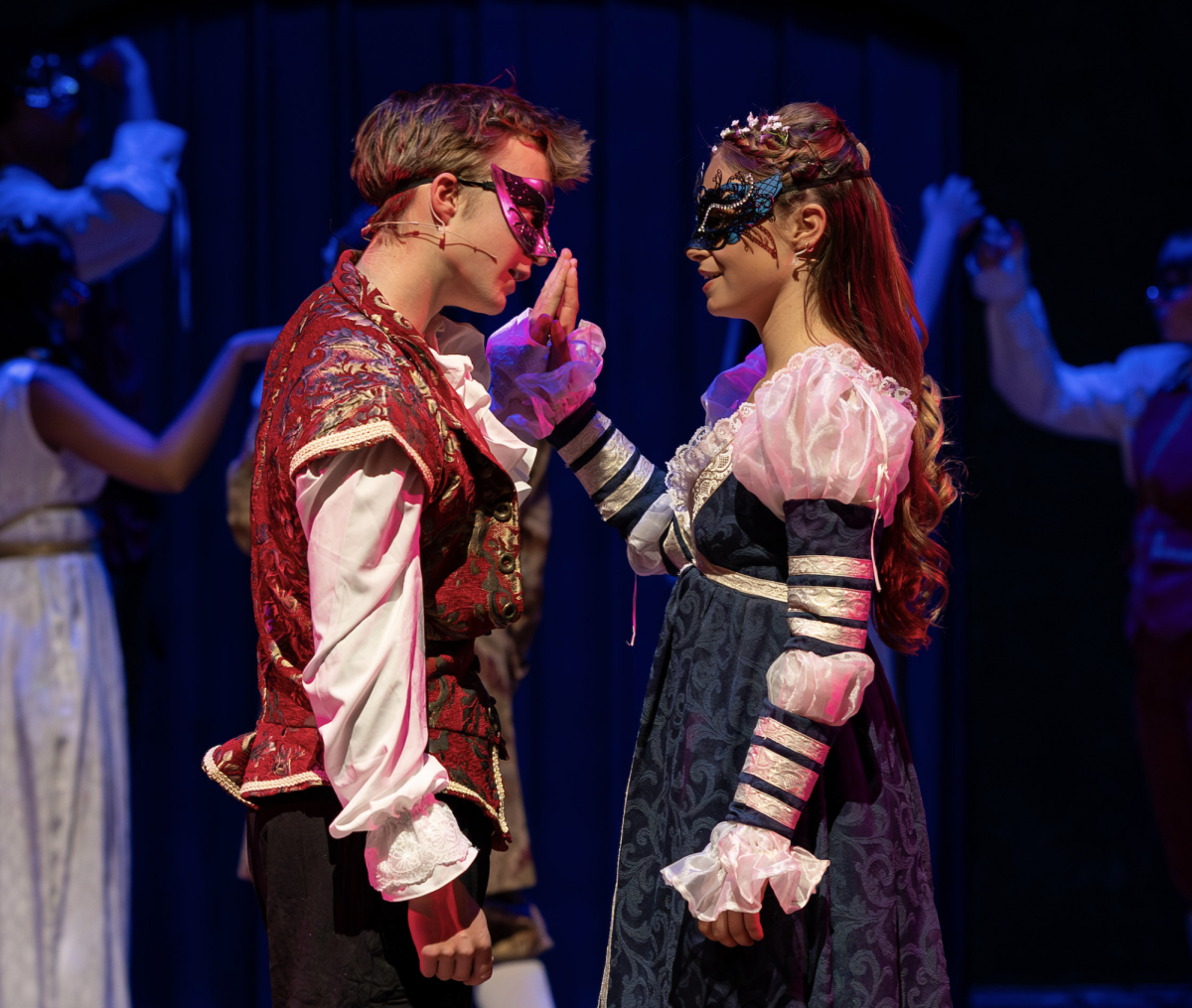
The Elizabethan costumes also reflected the traditional approach to the play. Juliet, played by Carla Oudin ’26, wore two different outfits. She said, “We wanted to implement different physical representations of the transformation and tone switch of the show; the costumes get darker, the house lights dim, more dramatic lighting, etc. After the wedding, the show turns from comedy to tragedy, and the costumes were one way of representing that.”
Kate DeAngelis, the costume designer for the Sharon Playhouse, designed the costumes for Romeo and Juliet as well as Pippin and Frankenstein.
On Saturday night, residents of Noble Horizons joined students for dinner in the Dining Hall and attended the production.