
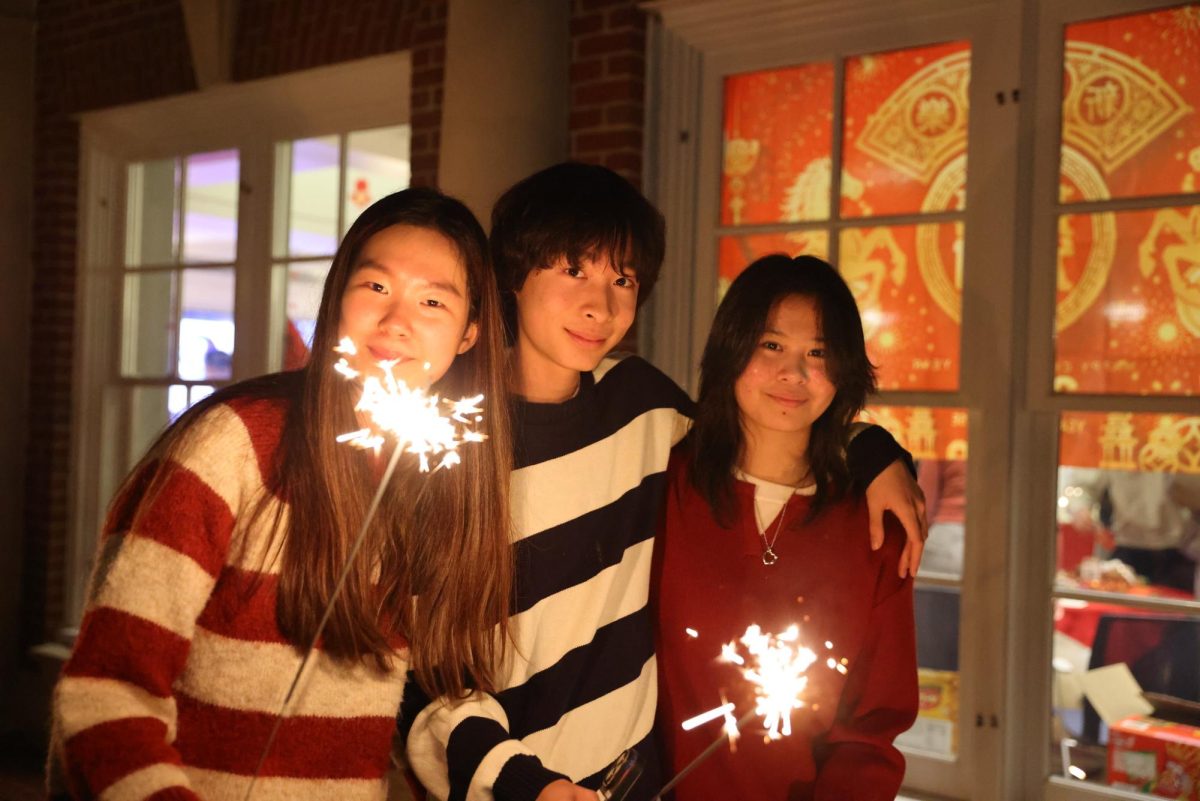
Lunar New Year is a multi-day celebration of the beginning of the lunisolar calendar year. It is primarily celebrated throughout East and Southeast Asia. This year is the year of the Fire Horse, which symbolizes speed, independence, and intense action.
This year, the celebration started with dumpling and scallion pancake making workshops in the Dining Hall. This was followed by an all- school performance including dancing, singing, and more. Later, the Dining Hall provided a special dinner.
Ms. Denee Hinman, senior general manager at CulinArt Managed Dining Services, was in charge of this year’s Lunar New Year dinner. She said, “I did a lot of research. I did my best to meet with parents and students to talk about what recipes they like and what ingredients they use. It was tough, but I tried to immerse myself in the experience. I went shopping at an Asian market to pick out all of the spices and teas.”
The menu featured scallion pancakes, dumplings, fried rice, glutinous rice balls, noodles, and more. Hinman said, “We had a committee that decided. I had more things, for example crispy pork, that was taken off, but I knew in my heart that people would like it. Since it was our first time in this dining hall, I learned a lot for next year, for example, including more gluten-free or vegan options. I also want to do a specialty Korean meal, hopefully soon.”
The dinner followed many traditions, including clementines, longevity noodles, chocolate coins, and dumplings. Clementines symbolize luck, wealth, and prosperity. Longevity noodles represent a long and healthy life. The chocolate coins symbolize fortune and abundance. The shape of dumplings resemble that of ancient Chinese ingots, indicating fortune in the upcoming year. Hinman said, “We researched to find the meaning of each item in hopes of making the whole meal symbolic.”
The Lunar New Year dinner took a lot of preparation. Hinman said, “Since we have so many different pieces of equipment in the kitchen, I had to assign certain chefs to certain foods and ensure that they watched videos on the importance of perfecting the spices and using equipment correctly. It was challenging to produce enough food at a rate fast enough to cater to so many people.”